
Power in the working range.
Digging, loading and driving on slopes require a torque curve suited to the job. Appropriate calibration can improve behaviour under load, provided the engine and drivetrain are designed for it.
CONSTRUCTION EQUIPMENT · ENGINE OPTIMISATION
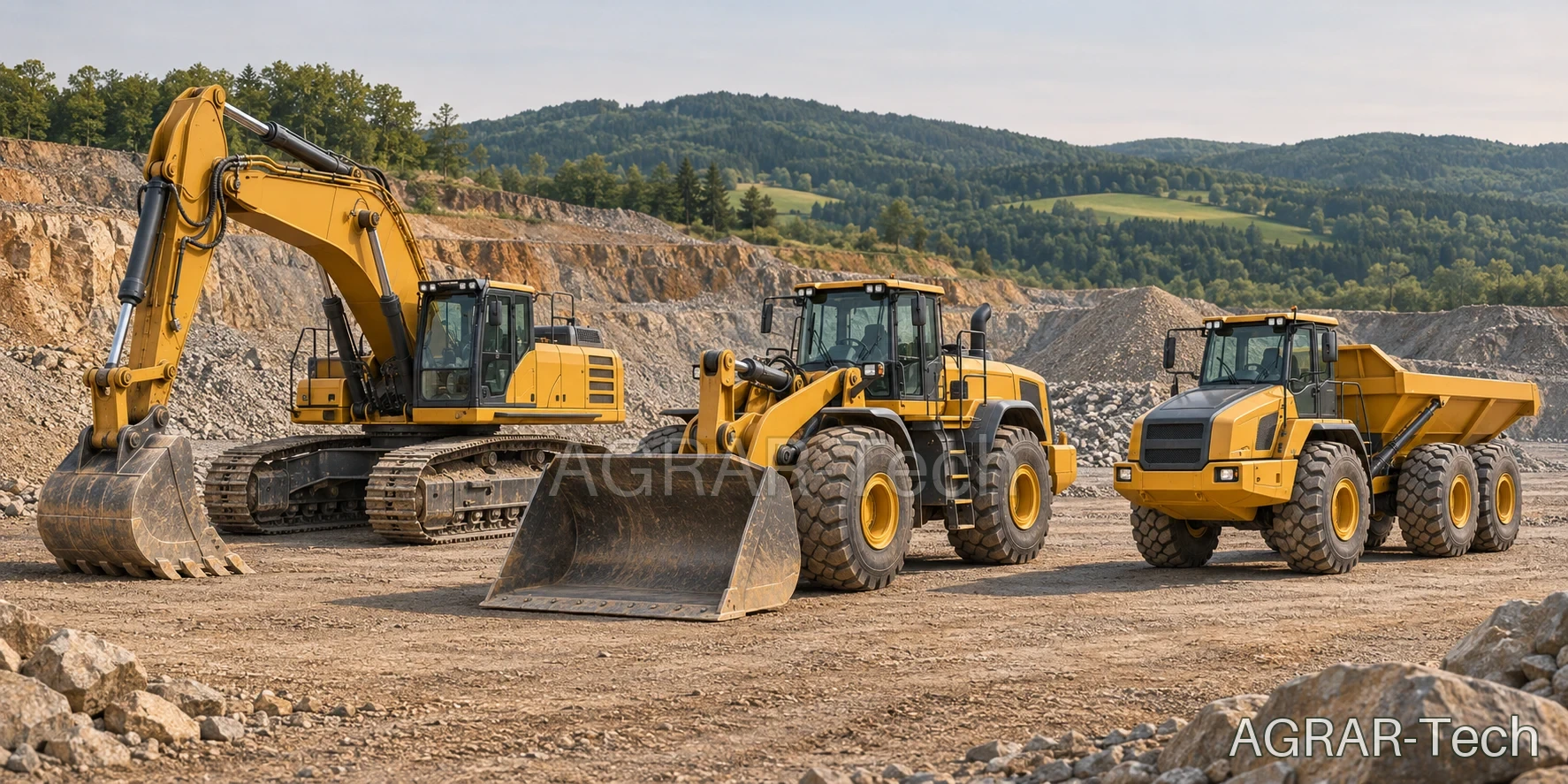
Excavators, wheel loaders and dumpers work under changing loads. We assess how individual engine calibration could suit your machine, its working cycles and your operation.
FROM BRAND TO APPLICATION
Select the manufacturer and check the listed applications. Actual feasibility depends on the model, engine, ECU and software version.
A listed brand does not mean every model is supported. We check missing entries and special applications on request.
MAKING A DIFFERENCE AT WORK
Digging, loading and driving on slopes require a torque curve suited to the job. Appropriate calibration can improve behaviour under load, provided the engine and drivetrain are designed for it.
Travel and working hydraulics share the engine's output. We assess response during changing tasks and check possible adjustments within the technical limits.
Compare fuel per tonne or cubic metre moved on the same task. Litres per hour alone reveal little. Savings depend on the machine, material, driving style and utilisation; we do not promise fixed percentages.
CONSIDER ENGINE AND HYDRAULICS TOGETHER
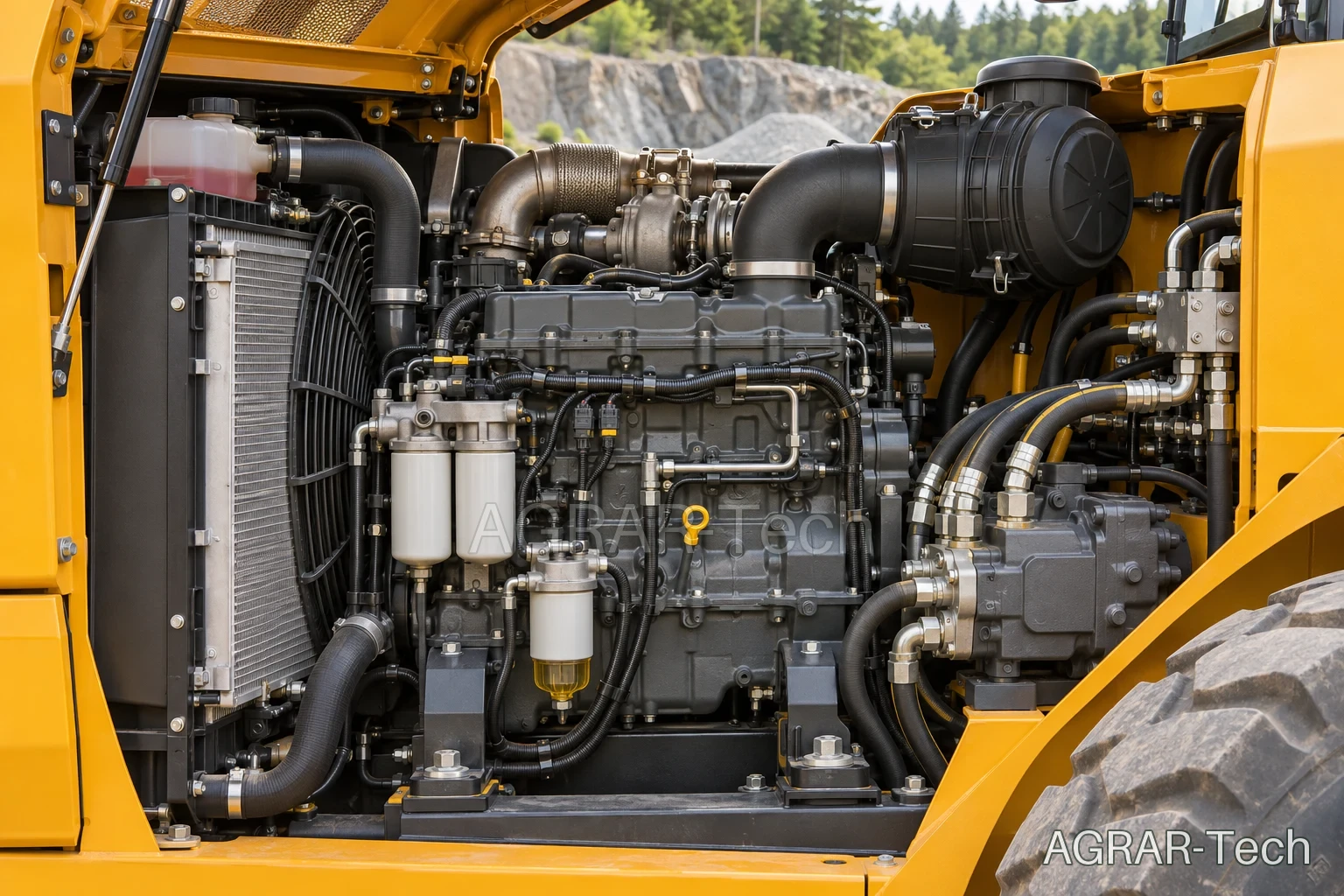
More engine torque alone does not automatically mean more lifting force, higher payload or shorter cycle times. Pumps, hydraulic controls, transmission and cooling have their own limits.
For excavators we assess digging and slewing cycles; for wheel loaders, loading runs and attachments; for dumpers, gradients, ground and payload. We also assess telehandlers, rollers and other construction machinery individually.
Maintenance condition, existing faults and the current software version must be checked before adjustment. Engine optimisation does not replace diagnosis or repair.
CLARIFY BEFORE IMPLEMENTATION
We first discuss the goal and the technical starting point. This determines whether a change is sensible and feasible.
Depending on the ECU, access is through the diagnostic port or directly at the removed unit. The tool, protocol, required activations and any need to open the unit are clarified in advance.
We also clarify what backup of the initial state is possible and how to handle later manufacturer updates. An update can overwrite existing calibration.
THREE STEPS TO ASSESSMENT
Manufacturer, model, year, operating hours and standard power. If available: engine and ECU identifiers and software version.
Material, terrain, attachments and typical load. Describe the behaviour you want to improve and any known fault messages.
After assessment we discuss options, scope and costs. You receive feedback specific to your machine.
YOUR SITE. YOUR PROJECT.
Send us the key details. Together we assess the next steps.
YOUR NEXT STEP
Let's find out together.